Crawling insect and boxelder bug abatement requires an integrated system rather than uncalibrated surface broadcasting. In East Tennessee, boxelder bugs ( University of Tennessee Extension classifies them as Boisea…
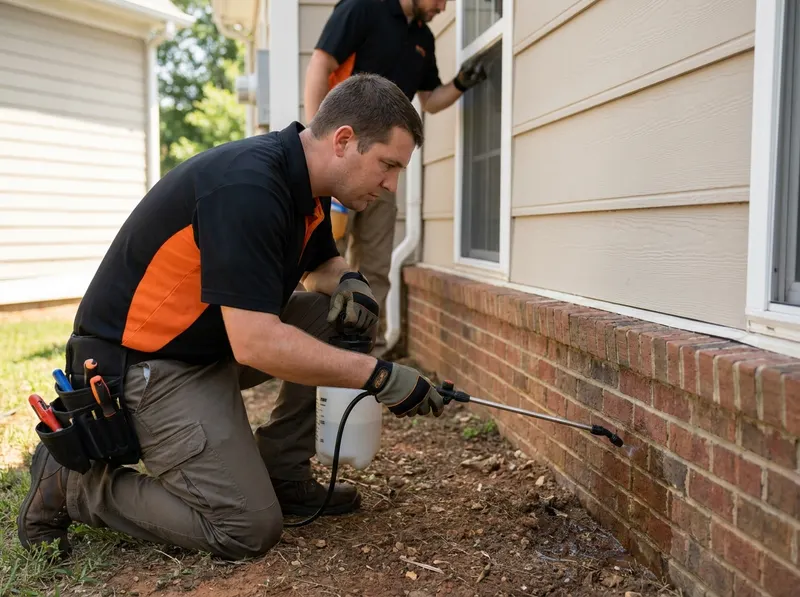
Crawling insect and boxelder bug abatement requires an integrated system rather than uncalibrated surface broadcasting. In East Tennessee, boxelder bugs (University of Tennessee Extension classifies them as Boisea trivittata) breed within female boxelder and seed-bearing silver maple trees during the summer. As ambient afternoon temperatures begin to drop every September, adults migrate en masse toward sunny, heat-reflective masonry. In historic wood-framed structures across Fourth and Gill and Old North Knoxville, these insects systematically navigate fascia boards, sash gaps, and uncaulked roof returns. Once inside crawlspaces or wall voids, they overwinter passively, often re-emerging indoors on unseasonably warm winter afternoons. Effective protocol halts this migration before the pests breach interior insulation.
Treatment execution follows strict multi-stage guidelines established by the EPA Integrated Pest Management Guidelines. Exterior barrier work establishes a continuous 3-foot vertical band up the foundation wall and a 5-foot horizontal apron over surrounding soil or gravel using microencapsulated non-staining suspensions. Concurrently, technicians deploy physical barrier measures, such as backer rods and specialized silicone sealants verified to resist UV deterioration under ASTM International building standards. In riverside neighborhoods such as Island Home Park and Sequoyah Hills, higher ambient humidity accelerates the activity of subterranean moisture-dwellers like millipedes, camel crickets, and silverfish. These species regularly infiltrate damp crawlspaces, making exterior foundation treating and ground-barrier desiccants essential components of total abatement.
Operational selection depends on pest density and building materials. For properties exhibiting isolated exterior sunning in neighborhoods like Bearden or Rocky Hill, dry-compound dusted entryways combined with a 10-foot perimeter barrier provide durable containment without internal chemical applications. Conversely, older brick-veneer homes in West Hills or Fountain City with unmeshed weep screeds require low-pressure liquid injections into expansion voids alongside physical brass-mesh insertion compliant with National Pest Management Association exclusion best practices. Structural alterations must balance pest prevention with standard moisture egress under Knox County Codes Administration guidelines. All applications adhere to safety directives coordinated with the Tennessee Department of Agriculture Regulatory Services, the Centers for Disease Control and Prevention environmental health criteria, OSHA respiratory and application safety standards, and the Pest Management Regulatory Agency.
Every job gets a firm, written price after a free on-site visit.
Tell us about your crawling insect and boxelder bug abatement job in Knoxville and we'll send a clear, written quote, usually the same day.
 AmberTrail Extermination